

|
Getting your Trinity Audio player ready...
|
Writing your first book is an exciting yet overwhelming journey.
Whether you’re an:
- Aspiring novelist
- A non-fiction writer
- Or simply someone who has always wanted to share their story with the world
But if it’s your first time writing, bringing your ideas to life on paper can feel both thrilling and daunting, especially if you are unsure of how to begin.
It’s completely normal to feel stuck at this stage, this is a common challenge for first-time authors.
The key to writing a book for first-time authors is to create a habit that fits into your life, not add stress.
Focus on getting the story on paper, and let revisions come later.
In fact, a study shows that first-time authors often struggle with writer’s block within their first few chapters.
So, don’t worry, this is just a part of the process, and it doesn’t mean you won’t finish your book.
With a little guidance and some practical tips, you can make steady progress toward completing your first draft.
In this blog, we’ll walk you through 4 tips for first-time authors that will transform your approach and help you move from “I can’t do this” to “I’m actually writing a book!”
So, let’s get started and make that dream of becoming an author a reality!
4 Key Tips Every First-Time Author Should Know
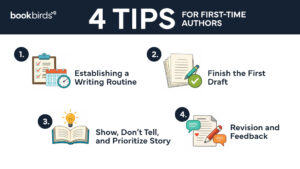
1. Establishing a Writing Routine
A writing routine is the foundation of a successful writing journey. But don’t worry, it doesn’t have to be some rigid, unbreakable schedule.
The goal is to create a habit that fits into your life, not add stress.
The trick is to start small and build gradually.
Even if it’s just 15 minutes a day, consistency is what matters most.
Here’s how to get started and make writing a regular part of your routine:
-
Start Small:
Begin by setting small, achievable goals, such as writing 300 words a day.
Even though this seems like a modest target, it’s important to focus on consistency over volume.
Writing a little every day helps you develop a habit, making the process feel less overwhelming.
-
Consistency Over Perfection:
If you can only dedicate 15–20 minutes a day to writing, that’s still progress.
By showing up each day, even for brief sessions, you’re building a foundation for success.
The goal is to make writing a regular part of your life.
-
Combat Procrastination:
One of the biggest hurdles to writing is procrastination.
Create a dedicated writing space or find a time that works for you.
Set up an environment where you can minimize distractions and immerse yourself in the creative process.
-
Focus on Quantity First:
Remember, your first draft is just that, a draft.
Don’t get bogged down in perfecting every word at this stage.
Focus on getting the story on paper, and let revisions come later.
2. Finish the First Draft
The first draft is never perfect, and that’s completely okay.
The most important thing is to keep writing, even when it feels like you’re wading through quicksand.
It’s easy to get bogged down by the desire for perfection, but remember, your goal right now is simply to finish.
The editing can come later.
So, give yourself permission to write messily and freely, knowing that you can always refine things in the next stage.
Here’s how to power through and get that first draft done:
-
Don’t Edit While Writing:
One of the biggest mistakes first-time authors make is editing while writing.
The goal of the first draft is simply to get your ideas down on paper.
You can always revise later, but don’t let the desire for perfection stop you from completing your draft.
-
Push Through the Hard Parts:
It’s normal for the writing process to get tough.
There will be moments when you want to throw in the towel, but it’s essential to push through.
The finish line is closer than you think.
Remind yourself that this is just the beginning, and getting words on paper is progress.
-
Let Ideas Flow Freely:
Sometimes the best ideas come when you stop worrying about the details.
Let the creative process flow naturally and don’t be afraid if your story takes unexpected turns.
Allow yourself the freedom to explore different directions without judgment.
For further tips on writing your first draft and staying motivated, consider enrolling in writing courses like those offered on MasterClass, where you can learn from renowned authors.
3. Show, Don’t Tell, and Prioritize Story
“Show, Don’t Tell” is a classic piece of writing advice that can take your story from good to great.
Instead of simply telling your readers what’s happening, You can depict them through dialogue, body language, and setting details.
This allows readers to feel the emotions right alongside the characters, making the experience much more vivid.
For example, instead of saying “He was nervous,” show it with “His palms sweat, and his voice trembled.” This creates a stronger emotional connection with readers, pulling them deeper into the narrative.
However, it’s important not to overdo the details; keep the story flowing while enriching it with vivid moments that resonate emotionally.
Tip:
For a deeper dive into writing techniques like “Show, Don’t Tell,” check out resources on Coursera or join a writing group to get feedback from fellow writers.
4. Revision and Feedback
Once your first draft is completed, the real work begins.
Revising your work can be an intimidating process, but it’s a necessary step to creating a polished manuscript.
Here’s how to approach it:
-
Embrace Heavy Revisions:
Don’t be afraid to cut, rewrite, or restructure your draft during the revision phase.
The first draft is just a rough sketch, now it’s time to fill in the details and smooth out any rough edges.
-
Seek Constructive Feedback:
Sharing your work with others can help you see it from a different perspective.
Whether you share your manuscript with a trusted friend, a writing group, or a professional editor, their feedback can be invaluable in improving your writing.
Just be sure to find people who will give you honest, constructive criticism.
-
Be Open to Criticism:
Receiving feedback can be difficult, especially if it’s not what you were expecting.
However, remember that criticism is an opportunity for growth.
Use it to refine your work, even if it means making significant changes.
3 Common Pitfalls to Avoid for First-Time Authors
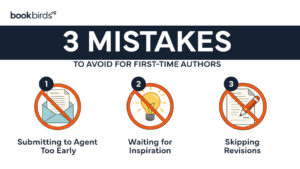
As a first-time author, there are a few pitfalls you should try to avoid during the writing process:
-
Submitting to Agents Too Early:
Many first-time authors are eager to get their manuscripts into the hands of agents or publishers.
But rushing to submit before the manuscript is polished can hurt your chances.
Make sure your work is fully revised before submitting.
-
Waiting for Inspiration:
Inspiration often doesn’t arrive on command.
Instead of waiting for the perfect moment to write, establish a consistent routine.
Inspiration may strike during your regular writing sessions.
-
Skipping Revisions:
Writing isn’t just about finishing the first draft, it’s about refining it.
Don’t underestimate the power of thorough revisions.
Your manuscript will only get better through careful editing.
Conclusion
Becoming a first-time author is a rewarding but challenging journey.
By establishing a writing routine, focusing on completing the first draft, showing rather than telling, and embracing revisions, you can make steady progress toward your goal.
Most importantly, don’t give up.
Writing a book takes time, and every word you write brings you one step closer to your dream.
Now, it’s time to get started.
Share your experiences, challenges, and tips in the comments below, and let’s create a supportive community for all first-time authors. Stay committed, and keep writing!